


Views: 0 Author: Site Editor Publish Time: 2026-08-02 Origin: Site


Selecting the wrong attachments does not just reduce your daily digging efficiency. It actively accelerates severe structural wear on the bucket itself. This mismatch inevitably leads to costly machine downtime. Proper equipment matching remains a critical operational decision for any site manager. You should never treat it as a simple consumable purchase. Your specific bucket style, machine tonnage, and soil conditions must align perfectly. They need to exactly match the chosen retention system and the structural wear profile.
This guide provides a highly pragmatic, decision-stage framework. You will discover exactly how to evaluate, shortlist, and procure the correct attachments. We will help you optimize your specific excavator setups for maximum field performance. By following these precise steps, you actively protect your heavy equipment investments and keep your crews moving.
Bucket class (General, Heavy, or Severe Duty) dictates the baseline structural limits for any G.E.T. installation.
Selecting teeth and adapters requires balancing penetration capability (for compacted soils) with abrasion resistance (for high-silica materials).
Hammerless retention systems are increasingly the industry standard for reducing installation risks and downtime.
Evaluating OEM versus aftermarket parts requires auditing fitment tolerances, alloy quality, and total cost of ownership (TCO) over upfront price.
Improper fitment triggers a massive cascade of mechanical failures. Consider a scenario involving oversized teeth on a standard-duty bucket. This simple mistake drastically reduces the machine's hydraulic breakout force. The excavator now works much harder to move the exact same material. The engine burns significantly more fuel during every single pass. The cycle continues until major structural components finally fail under the added stress.
A strong attachment strategy dramatically extends the lip life of your expensive bucket. It continuously optimizes machine fuel burn by aggressively reducing drag through the dirt. A well-planned approach also stabilizes your ongoing maintenance replacement cycle. Predictable maintenance keeps your heavy construction projects running exactly on schedule.
Always contrast the upfront price of premium high-abrasion tools against hidden field expenses. Cheap tips routinely lead to rapid, premature wear. You soon face frequent parts replacements and emergency field welding sessions. These unexpected hidden penalties rapidly consume any initial purchasing savings. Using properly matched Ground Engaging Tools successfully prevents this sudden financial drain.
Before upgrading your setup, you must firmly establish your baseline constraints. You cannot select correct parts without knowing your physical limits.
The hydraulic power of your excavator directly limits your adapter sizes. Massive breakout forces require incredibly robust shanks to survive the continuous shock. Smaller machines need much sleeker tooth profiles to adequately penetrate hard ground. Heavy machines will tear through weak adapters almost instantly. You must balance the physical mass of the adapter against the sheer hydraulic push.
You must always respect your bucket's designated duty rating. We categorize these primarily into General Duty (GD), Heavy Duty (HD), and Extreme/Severe Duty (XD/SD). Trenching buckets also carry their own uniquely narrow constraints. An HD bucket safely supports heavier wear packages. A GD bucket physically cannot handle the extra weight of extreme attachments. Adding too much steel to a GD bucket causes severe operational sluggishness.
The base edge thickness remains a non-negotiable physical constraint. The bevel angle also strictly dictates proper fitment. You must measure these dimensions precisely. They determine your valid options for weld-on adapters or bolt-on cutting edges. An incorrect bevel angle forces the welder to fill massive gaps, significantly weakening the joint.
Let us review the essential baseline identification steps:
Check the machine operating weight and hydraulic breakout force in the service manual.
Identify the exact bucket duty class stamped securely on the OEM metal plate.
Measure the exact base edge thickness using calibrated heavy-duty calipers.
Calculate the specific bevel angle to ensure flush adapter fitment.
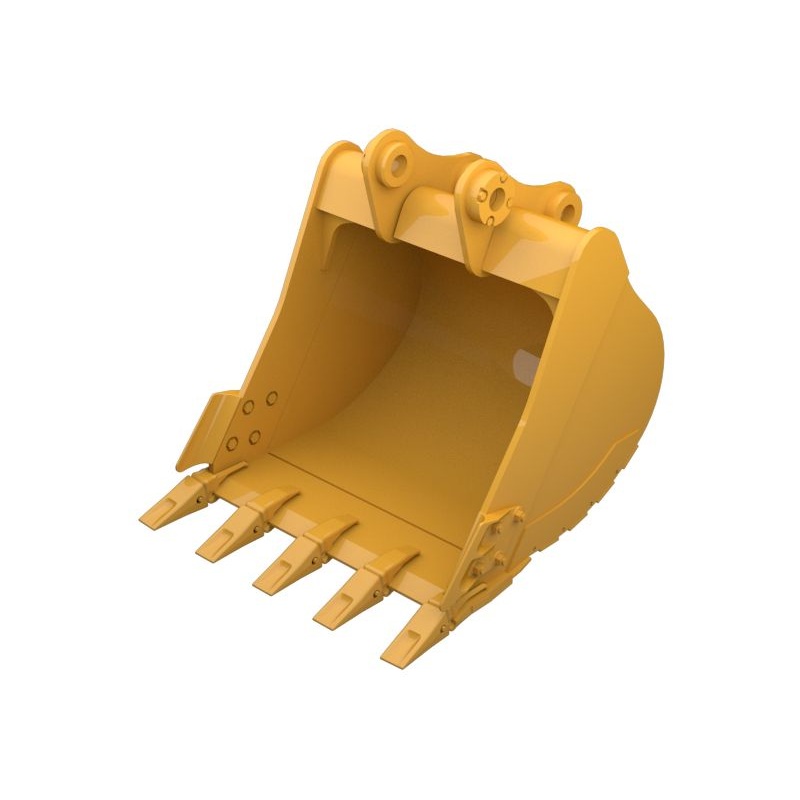
You need to understand the major categories available for your excavator fleet. Knowing your options allows you to tailor the machine to the specific job site.
Operational profiles vary widely across different geological environments. Standard tips work extremely well for general loam and loose topsoil. Penetration tips easily slice through densely compacted clay. Rock chisels aggressively break up hardpan and sedimentary stone. Heavy abrasion tips survive the brutal scouring of high-silica sand. Twin tiger designs aggressively rip through thick winter frost.
Tip Profile | Primary Application | Target Material Type |
|---|---|---|
Standard | General digging operations | Loam, topsoil, loose dirt |
Penetration | Trenching and hard digging | Compacted clay, dense gravel |
Rock Chisel | Fracturing hard materials | Sedimentary rock, hardpan |
Heavy Abrasion | High-wear environments | High-silica sand, granite |
Twin Tiger | Extreme frost and ice | Frozen ground, severe ripping |
Adapters firmly secure the replaceable teeth to the bucket lip. Flush-mount adapters leave a perfectly smooth finish on the bucket floor. They work best on standard clean-up buckets. Bottom-strap adapters provide extra weld area beneath the lip for added strength. Wrap-around adapters offer the maximum possible structural strength. They easily handle extreme stress loads on severe duty mining buckets.
Severe duty applications demand extensive external protection. Wear shrouds actively prevent base structural damage. Lip shrouds protect the vulnerable areas located strictly between the teeth. Heel shrouds heavily guard the lower bucket corners from dragging friction. Side cutters and protectors shield the vertical cheek plates. These vital additions keep the main bucket structure entirely intact.
Base edges require very careful operational consideration. Clean-up buckets often utilize simple bolt-on reversible edges. Grading buckets benefit immensely from continuous straight profiles. Weld-on edges provide permanent structural rigidity for much tougher digging tasks.
Site conditions dictate everything. You cannot blindly order parts without assessing the dirt.
You must intelligently evaluate your site material using an impact-abrasion framework. High-impact rock clearly requires blunter, heavier-mass teeth. This bulk actively prevents catastrophic snapping during violent strikes. Highly abrasive sand demands something entirely different. It strictly requires high-density wear material. You need a self-sharpening profile to maintain ground penetration as the metal inevitably wears away. Selecting proper Ground Engaging Tools requires perfectly balancing these two opposing forces.
Traditional pin-and-retainer systems still exist on older fleets. However, modern hammerless locking mechanisms now heavily dominate newer setups. High continuous vibration rapidly loosens standard pins. Hammerless locks provide vastly superior retention reliability. They also dramatically increase parts replacement speed directly in the field.
Adhering strictly to site safety protocols remains absolutely mandatory. Many large mine sites now strictly mandate hammerless systems. This policy successfully mitigates dangerous strike-hazard injuries. Traditional sledgehammer installations frequently send dangerous metal splinters flying. Hammerless systems keep your maintenance crew completely safe and compliant.
Even the best parts fail if installed poorly. You must manage installation variables tightly.
Installing weld-on adapters demands highly specialized metallurgical expertise. Poor welding totally destroys underlying structural integrity. Improper pre-heating predictably causes massive sudden failures. Heat-affected zone (HAZ) cracking permanently ruins expensive buckets. Botched installations frequently void strict manufacturer warranties entirely. You must always use certified welders for these critical upgrades.
Common Mistake: Ignoring ambient temperature. Welding cold steel without a proper torch pre-heat guarantees brittle microscopic fractures.
Skepticism frequently surrounds third-party aftermarket parts. You should rigorously evaluate aftermarket suppliers before buying. Check their factory casting tolerances carefully. Verify their internal alloy consistency. Poor fitment leads directly to severe "pin walking." The tooth rattles violently on the shank. This aggressive movement causes premature adapter failure. Good fitment ensures maximum possible lifespan.
You need highly realistic expectations for ongoing maintenance. Set up a strict regular inspection routine. Teach your operators exactly what to look for daily. Replace tips right before the adapter wears down into the pocket. Letting a tip wear too far completely destroys the expensive shank underneath it.
Best Practice: Keep a digital log of tip replacements. This exact data highlights sudden wear anomalies before they cause major breakdowns.
You are now ready to begin the procurement process safely.
Buyers firmly need exact information before requesting formal quotes. Collect these exact specifics before calling a vendor:
Excavator make and the exact specific model number
Bucket OEM brand and all serial plate data
Measured base edge thickness in strict millimeters or inches
Primary geological material mined or dug on the job site
Always properly vet your suppliers thoroughly. Look closely at their local parts availability. Long factory lead times can totally ruin a tight project schedule. Demand strong ongoing technical field support. Read their specific warranty terms closely. Ensure they fully protect you against premature breakage and internal casting defects.
Do not attempt to change your entire fleet simultaneously. Initiate a single, focused site audit first. Run a strict wear-life tracking trial. Test a shortlisted supplier heavily on one tough machine. Prove the actual return on investment directly in the dirt. Standardize the whole fleet only after seeing successful validation.
Matching your bucket attachments remains a precise engineering decision. This process successfully bridges machine capability with harsh soil realities. Prioritizing bucket protection always yields better long-term returns. Excellent parts optimize fuel burn and slash emergency downtime. Protect your primary bucket structure at all costs.
Take these actionable steps immediately to secure your fleet operations:
Audit your current tip wear patterns to identify hidden fitment issues.
Upgrade high-vibration machines to modern hammerless retention systems.
Contact an application specialist today to verify your bucket lip dimensions accurately.
Download a technical measurement guide before ordering your next wear package.
A: First, clean the base edge thoroughly to remove hardened dirt. Use heavy-duty calipers to measure the exact thickness of the steel lip. Next, measure the bevel angle using an angle gauge. Accurate thickness and angle measurements ensure a tight flush fit for the adapter.
A: We advise caution. While some aftermarket teeth fit standard OEM adapters, mixing systems poses risks. Different brands often use distinct locking mechanisms. Loose casting tolerances lead to pin walking. Unmatched parts rattle under heavy loads, which ultimately causes premature failure of the entire assembly.
A: Wear life remains highly variable. It depends entirely on soil silica content, operator skill, and machine breakout force. Do not rely solely on standard manufacturer claims. We highly recommend running a controlled site trial. Track operating hours on one bucket to establish your own accurate baseline.
A: Teeth usually break at the pin due to poor tolerances. Unmatched tip-to-adapter gaps cause internal movement. Incorrect pin installation also causes shearing. Finally, using a slender penetration tooth in a high-impact rock environment guarantees snapping. Always match the tooth profile to the actual impact conditions.


